|
Bradenton · Manatee County
Florida Home Insurance for Buyers: What Actually Drives Your Quote in Bradenton
|
Start here
Two things kill Florida deals on insurance more than anything else, and in my experience they are roof age and a failed four-point inspection. Almost everything else is survivable. This page covers what actually drives your quote here, what the law does and does not protect you from, and the one roof-age rule that buyers and contractors keep citing that never became law.
|
01 · What actually goes wrong
What kills a Bradenton deal on insurance?
Roof age and four-point inspection failures. That is the honest short answer, and it is worth knowing before you fall in love with a house rather than after you have an inspection report and nine days left on a contingency.
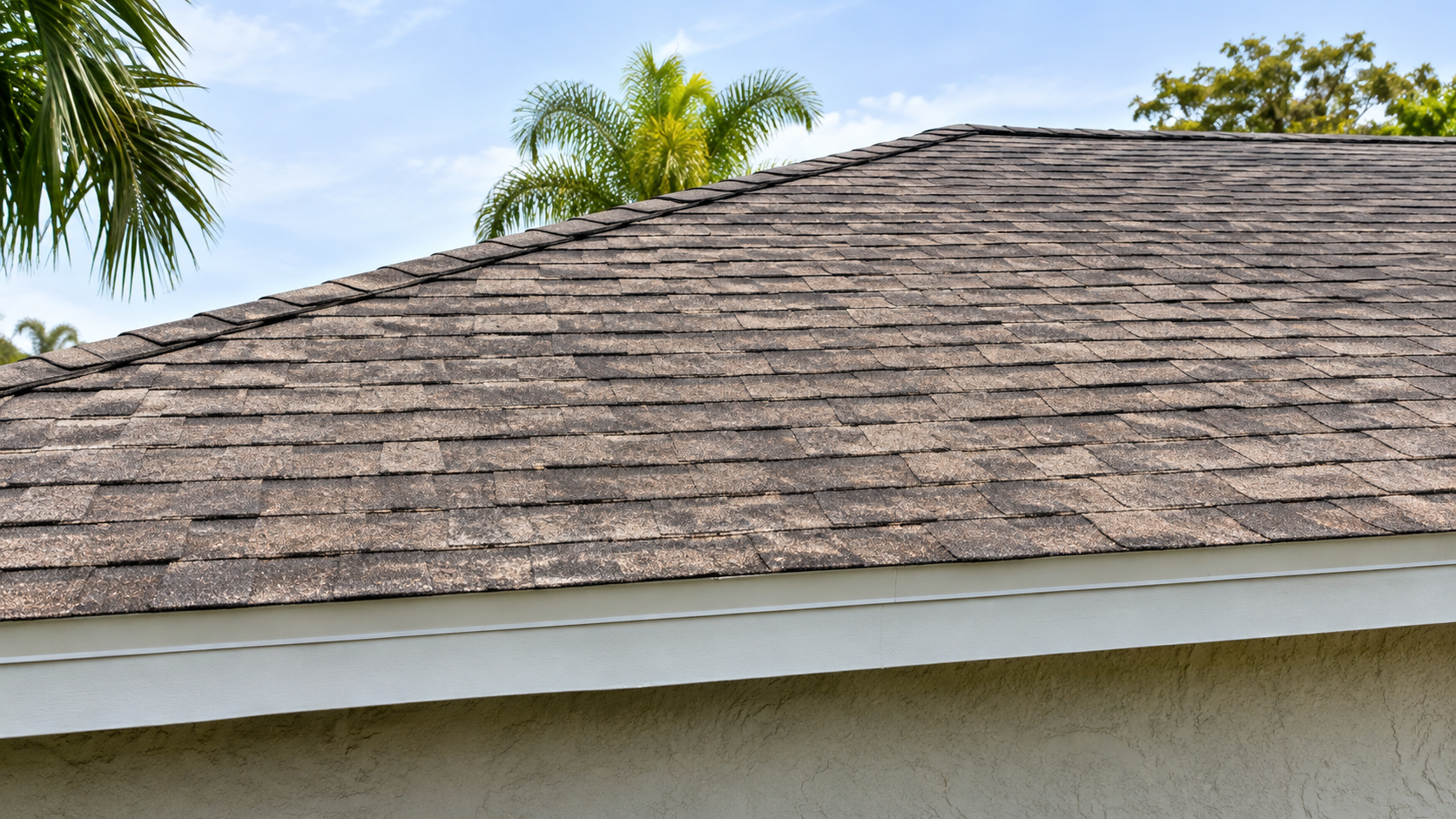
On roof age, in my experience about fifteen years on an asphalt shingle roof is where carriers start to get uncomfortable. That is not a legal threshold and it is not every carrier — it is the point where the conversation changes from routine to something you have to work at. Below that, the roof is usually a non-issue. Above it, the roof decides which carriers will even look at the house.
A four-point inspection is the other one, and it catches people off guard because it is not the same thing as a home inspection. It looks at exactly four systems — roof, electrical, plumbing and HVAC — and it exists for the insurer, not for you. A house can pass a general home inspection and still fail a four-point, because the two are answering different questions. If you are buying anything older here, assume a four-point will be required and get it early rather than at the end.
02 · The law, accurately
Can an insurer refuse a policy just because the roof is old?
Not purely on age, and this is the single most useful thing on this page. Florida Statute 627.7011 sets out protections that a lot of buyers walk away from a house without ever hearing about.
| Roof age |
What the statute does |
| Under 15 years |
An insurer may not refuse to issue or renew solely because of the age of the roof. |
| 15 years or older |
You must be allowed to have the roof inspected by an authorized inspector, at your expense, before replacement can be required as a condition of coverage. |
| Inspection shows 5+ years of useful life |
An insurer may not refuse solely because of the roof’s age. |
Source: Florida Statutes §627.7011. Statutory language changes; confirm current text at leg.state.fl.us and confirm your specific policy with a licensed insurance agent.
Read the word solely carefully, because it is doing all the work. Condition, prior claims, and the rest of an insurer’s underwriting still apply. What the statute prevents is age alone being the automatic disqualifier people treat it as. If a roof is older and otherwise sound, an inspection is the move — and get an insurance quote while you still have an inspection period, not after.
|
The 2026 roof rule that never became law
You may have been told Florida passed a new roof law in 2026 — one that splits low-slope from steep-slope roofs, lets a coating restore a flat roof instead of replacing it, and extends roof-age protection beyond homeowner’s policies. That was Senate Bill 808, and the bill text does say it takes effect July 1, 2026.
It never became law. The Florida Senate’s own bill history records SB 808 as “Died in Banking and Insurance” on March 13, 2026. Several companion property-insurance bills died the same day. The slope distinction does not exist in Florida law, and no coating provision entitles you to anything.
I suspect the confusion spread because the filed bill carries a real effective date, and people read the bill without reading its history. If a contractor or an agent quotes the slope rule to you, ask them which chapter law it became. The protections that do exist are the ones in the table above, and they are worth knowing precisely.
|
03 · The cheapest win available
What is wind mitigation, and what is the third nail?
Wind mitigation is where Florida insurance stops being something that happens to you and becomes something you can act on. Florida Statute 627.0629 requires insurers to build discounts for mitigation features into their rate filings — not as a courtesy, as a condition of doing business here. The statute names the categories: roof strength and covering, roof-to-wall and wall-to-foundation connections, and opening protection.
The report that documents all of it is a wind mitigation inspection, recorded on Florida’s Uniform Mitigation Verification Inspection Form, OIR-B1-1802. That form, not your description of the house, is what an underwriter actually reads.
The part worth understanding
Your house may already have the strap and get no credit for it
Roof-to-wall attachment is graded in tiers. Toe nails sit at the bottom and typically earn nothing. Clips are a meaningful step up, and single or double wraps are better still. Here is the part that surprises people: having a strap is not the same as being credited for one. Each tier above toenails requires the connection to meet the form’s minimal conditions for how it is fastened. A strap that does not meet them gets recorded as toenails — so a house with straps can be rated as though it has none.
How roof-to-wall attachment is graded
| Tier |
What the inspector records |
Credit |
| Toe nails |
No qualifying connection — including a real strap that does not meet the form’s minimal conditions |
Typically none |
| Clips |
A strap meeting at least one of the form’s minimal conditions |
A meaningful step up |
| Single wrap |
Strap wraps over the top of the truss |
Better still |
| Double wrap |
Strap wraps and is fastened on both sides |
Strongest tier |
Credit amounts are not set by statute. Each insurer files its own actuarially supported values with the state under §627.0629, so the dollar value of moving up a tier differs by carrier and by house — ask your agent what it is worth on yours.
That is what the “third nail” trade refers to — bringing an existing, under-fastened connection up to a tier that actually earns credit. It is a retrofit, not a rebuild, and there are contractors here who do nothing else. In my experience adding the third nail can save over a thousand dollars in the first year alone — often more than the retrofit and the inspection cost together. Credit amounts are set by each insurer’s own filed rates, so what it is worth on a particular house is a question for your agent, not a number anyone can promise you.
|
Check the revision date on any report you are handed
The state revised this form. Inspections performed on or after April 1, 2026 must use OIR-B1-1802 (Rev. 04/26). An older Rev. 01/12 report can still be used if it was completed within the five years before that date and no structural changes have been made since.
The revision updated several features, roof-to-wall attachment among them, and it generally works in an owner’s favor — the minimal conditions for the stronger tiers now require only one of three to be met rather than all of them. It also added FORTIFIED Home certificate eligibility. So if a seller hands you a wind mitigation report, look at which revision it is and when it was done, because an old report may understate what the house would earn today.
|
|
Pro tip worth two minutes
Since October 1, 2023, Florida insurers have been required to publish the hurricane mitigation discounts they offer on their own website, reachable from the home page or their main property insurance page. That is in the statute. So before you spend a dollar on an inspection or a retrofit, go read your carrier’s posted discount schedule and see what they actually credit. It is public, it is theirs, and it costs you nothing to look.
|
04 · The out-of-state blind spot
What is a hurricane deductible, and why is it different?
This is the single thing buyers from out of state consistently do not understand, and it is the one I would most want you to read twice. A Florida policy generally carries two deductibles, not one. There is your ordinary all-other-perils deductible — a flat dollar figure, the kind you are used to. And there is a separate hurricane deductible, which is normally written as a percentage of the dwelling coverage rather than a flat amount.
A percentage of the insured value is a very different number from a flat deductible, and it scales with the house. On a higher-coverage home the gap between the two can be large. People read their flat deductible, assume that is what a storm would cost them, and are genuinely shocked later.
Florida law also requires residential rate filings to separate the hurricane premium from everything else, and requires your premium notice to show each one. So the information is there — ask to see the hurricane deductible as a dollar figure, not a percentage, and ask whether it applies once per season or per storm. Those two answers change what a bad year actually costs you, and they are worth having before closing rather than after.
|
From Ian
None of this is a reason not to buy here. It is a reason to get the insurance conversation started during your inspection period instead of three days before closing, when you have no leverage and no time. The buyers who get hurt by Florida insurance are almost never the ones who asked early.
|
05 · The timing trap
Can you get insurance bound during hurricane season?
Often you cannot, and it is the kind of problem that stops a closing cold. Hurricane season runs June 1 through November 30, and when a storm threatens, carriers stop writing. It is called a binding suspension or a binding moratorium, and if you cannot bind a policy you cannot close, because your lender will not fund without coverage in place.
Citizens publishes its rule, so it can be quoted exactly. Binding is suspended “regardless of effective date, when a tropical storm or hurricane watch or warning has been issued by the National Weather Service for any part of the State of Florida,” and while it is in force “agents may not bind applications for new coverage or policy changes for increased coverage.”
|
Read that twice
Any part of the state. A storm threatening the Panhandle can suspend binding in Bradenton on a clear blue day. And regardless of effective date means you cannot write around it by post-dating the policy. Private carriers set their own rules rather than following Citizens, and they vary — but most do something comparable, so ask your agent what theirs is before you need to know.
|
It is not rare and it is not long. Citizens suspended binding statewide on October 7, 2026 for Tropical Storm Isaias and lifted it a few days later. A few days is nothing — unless they are the few days before your closing, and then it is everything.
The move is simple: if you are closing between June and November, bind as early as underwriting allows. Not the week of closing, and not once the forecast cone shows up on the news. By then the window may have closed, and the delay is not something your agent or your lender can override. I would rather have that conversation with you in week one of the inspection period than on a Wednesday with a Friday closing.
06 · Three separate policies
Is flood insurance included in my homeowners policy?
No. Flood is a separate policy, and that catches people every year. Homeowners covers wind; flood covers rising water; and in some coastal situations wind can be carved out into its own wind-only policy as well. Three different things, potentially three different bills, and the one that is not included is the one that does the most damage here.
Whether a lender requires flood coverage depends on the property’s FEMA flood zone, which changes address by address rather than by neighborhood. And flood zone is not the same thing as your evacuation level — Manatee County assigns evacuation levels A through E and states plainly that they are not FEMA zones and are not used to price flood insurance. My guide to flood zones and elevation certificates in Manatee County walks through how to look up both, and what an elevation certificate actually does for your premium.
07 · How I handle it
How I work insurance into an inspection period
I am not an insurance agent and I do not sell policies. What I can do is make sure the insurance question gets asked early enough to still be useful, because the order you do things in here changes what options you still have.
| 01 |
Ask the roof’s age and permit history before you write. Not after inspection. It is a public record question and it changes what the house costs you to own. |
| 02 |
Get a real quote during the inspection period, from a licensed agent, on that specific address — not a general estimate for the area. Two similar houses on the same street can quote very differently. |
| 03 |
Ask whether a wind mitigation inspection has already been done, and if not, whether one is worth ordering. If the house has straps that were never credited, this is where you find out. |
| 04 |
Pull the flood zone and any elevation certificate, and price flood alongside the homeowners quote rather than after it. |
| 05 |
Add it all into carrying cost, not just price. Insurance, flood, taxes at the reset value, and any HOA or CDD obligation. A seller’s homestead exemption and accumulated assessment cap do not transfer to you, so the tax line on a listing is usually not the figure you will pay. My honest guide to moving to Bradenton covers the full carrying-cost picture. |
If you are financing, your lender has a say in all of this too — coverage minimums, flood requirements, and escrow. The home loans and financing guide covers how that side works, and VA loans in Bradenton if you are using the benefit, since VA appraisals carry their own minimum property requirements that often overlap with what an insurer wants.
Questions
Florida insurance questions, answered
|
Can a Florida insurer refuse to cover a house because the roof is old?
Not on age alone. Under Florida Statute 627.7011, an insurer may not refuse to issue or renew solely because of roof age when the roof is under 15 years old. At 15 years or older you must be allowed to have the roof inspected by an authorized inspector, at your expense, before replacement is required as a condition of coverage — and if that inspection finds five or more years of useful life remaining, the insurer may not refuse solely because of the roof’s age. Condition and the rest of underwriting still apply, so this is a protection against age being the automatic disqualifier, not a guarantee of coverage.
|
|
Did Florida pass a new roof law in 2026 for low-slope and steep-slope roofs?
No. That was Senate Bill 808 in the 2026 session, and the Florida Senate’s own bill history records it as having died in the Banking and Insurance committee on March 13, 2026. The filed bill text does carry a July 1, 2026 effective date, which appears to be why the claim keeps circulating, but a filed bill that dies in committee never takes effect. The low-slope versus steep-slope distinction and the roof-coating provision are not Florida law. The protections that do exist are the ones in Statute 627.7011.
|
|
At what roof age do Florida insurers start to balk?
In my experience about fifteen years on an asphalt shingle roof is where carriers start to get uncomfortable here. That is an observation, not a legal threshold, and it varies by carrier and by the roof’s condition. Below that it is usually a non-issue; above it, roof age tends to decide which carriers will look at the house at all.
|
|
What is a four-point inspection and can a house fail one?
A four-point inspection looks at four systems — roof, electrical, plumbing and HVAC — and it exists for the insurer rather than for you. It is not the same as a general home inspection, and a house can pass a home inspection and still fail a four-point, because the two answer different questions. Along with roof age, four-point failures are the thing I see derail Bradenton deals most often. If you are buying an older home here, assume one will be required and order it early in the inspection period.
|
|
What is the third nail and is it worth doing?
Having a strap is not the same as being credited for one. Each tier above toenails requires the roof-to-wall connection to meet the form’s minimal conditions for how it is fastened; a strap that does not meet them is recorded as toenails, which typically earns nothing. So a house with straps can be rated as though it has none. The “third nail” trade refers to bringing an under-fastened connection up to a tier that earns credit — a retrofit rather than a rebuild. In my experience it can save over a thousand dollars in the first year alone, often more than the retrofit and inspection cost together. Credit values come from each insurer’s own filed rates, so ask your agent what it is worth on your specific house.
|
|
Why is my Florida hurricane deductible different from my regular deductible?
Because it is usually written as a percentage of your dwelling coverage rather than as a flat dollar amount. A Florida policy generally carries both: an all-other-perils deductible you are used to, and a separate hurricane deductible that scales with the insured value of the house. This is the thing buyers from out of state most consistently misunderstand. Ask your agent to state the hurricane deductible as a dollar figure, and ask whether it applies once per season or per storm.
|
|
Does homeowners insurance cover flood damage in Bradenton?
No. Flood is a separate policy. Homeowners covers wind, flood covers rising water, and in some coastal situations wind is carved out into its own wind-only policy as well. Whether your lender requires flood coverage depends on the property’s FEMA flood zone, which changes address by address rather than by neighborhood. Flood zone is also not the same as your evacuation level, which Manatee County assigns separately and does not use to price flood insurance.
|
|
Can you buy insurance when a hurricane is coming?
Generally no. Carriers suspend binding when a storm threatens, which means no new policies and no increases in coverage. Citizens’ published rule suspends binding regardless of effective date whenever the National Weather Service issues a tropical storm or hurricane watch or warning for any part of Florida — so a storm near the Panhandle can stop you binding in Bradenton. Private carriers set their own rules and they vary, but most do something comparable. Since a lender will not fund without coverage in place, a suspension during hurricane season, June 1 through November 30, can stall a closing outright. Bind as early in your inspection period as underwriting allows rather than the week of closing.
|
|
Is an old wind mitigation report still good?
Sometimes, but check it. Inspections performed on or after April 1, 2026 must use the revised form, OIR-B1-1802 (Rev. 04/26). An older Rev. 01/12 report can still be used if it was completed within the five years before that date and no structural changes have been made since. The revision updated several mitigation features, including roof-to-wall attachment, and the minimal conditions for the stronger tiers now require only one of three to be met rather than all of them. That generally favors the owner, so an older report may understate what the house would earn on a new inspection.
|
|
How do I find out what discounts my insurer actually gives?
Read their website. Since October 1, 2023, Florida insurers have been required under Statute 627.0629 to publish the hurricane mitigation discounts available to policyholders on their own site, reachable from the home page or their main property insurance page. Checking that posted schedule before you pay for an inspection or a retrofit tells you what the work is actually worth to that carrier.
|
|